Expression and Engagement

Communication strategies are the result of combining powerful visuals with inspiring messages. Expression and engagement are strong ingredients used by the best marketers to concoct the right corporate image translating into more sales and exposure.

My Full Profile About This Site

STRENGTHS

Marketing

Creative and all-around marketing professional that develop gimmick-free strategies based on product strength and value.

Public Relations

Leverages strong communication and interpersonal skills to deliver strong and convincing messages that inspire and educate.

Digital Media

Develops and delivers a wide-array of marketing and public relation products targeted towards a broad, global audience.

Portfolio

find older projects and articles

Saturday, December 15, 2012

From The Bottom, Going Up

Brady is considered among the greatest players of all-time
This is proof that if you are at the bottom, there's no other way to go but up.

Tom Brady was a picked 199th overall in the 2000 NFL drafts. Overlooked by most NFL Scouts despite an impressive career in Michigan (because he didn't have NFL "size" and "quickness"), Brady was picked by the New England Patriots on a sixth round compensatory selection awarded by the NFL. 


In training camp, he took that chip on his shoulder and won a spot on the regular roster as the fourth string QB behind Starter Drew Bledsoe and back-ups Michael Bishop and John Friesz. Before season's end, he was the 2nd string QB. The following year, he was impressive at preseason and beat out Damon Huard as the undisputed back-up to Bledsoe.


Brady's Draft Sheet from 2000

When Bledsoe suffered internal bleeding during week 2 of the 2001 season, Brady took over and since then, hasn't looked back. He led the Patriots to its first Super Bowl Championship that year and since then, won 2 more. He would win multiple MVP awards and shatter season passing records. He led the Patriots to the first "perfect" regular season in over 4 decades. 


Despite our hatred towards pretty boys, no one can argue that Brady is having a career for the ages. His NFL accomplishments guarantee him a first ballot spot in the NFL Hall of Fame. Truly remarkable for a sixth round pick.


About The Author

Victor Dela Casa spent over a decade working as business professional in Canada. Worked in IT, finance, marketing, international trade, public service, project management and the maritime industry. Degree in Economics from the University of the Philippines and Honours Diploma from Eastern College.

Friday, December 14, 2012

10 Things To Remember This Holiday

However you want to call it, Christmas, Hanukah or Holiday Season, this time of the year is the most wonderful time of the year.

As we go through the merry-go-round hustle and bustle, the shopping sprees, the light show, and the food trip, we should stop for a moment to ponder the lessons learned this year.

I'm listing down 10 things based on events from 2012. Maybe you ought to as well.


1. Sometimes, you lose


The good thing about winning is you are winning. The good thing about losing is that it makes you appreciate your victories more. Don't let setbacks keep you down.

2. Money isn't everything

If you are a victim of the latest financial scam, money multiplier schemes are just "schemes" and that greed is a sin.

3. Change is good

Wether it's a change of scenery, a new life chapter, a change of attitude, or new company, change is always for the best.


4. Supporting the troops

Let's remember and support the men and women of our military who vigilantly protect our territorial dominion from greedy foreigners.


5. Environmental responsibility

We need to preserve the environment. Support efforts to lower non-degrading waste, to minimize carbon emissions and to stop corporate irresponsibility.

6. Paying it forward

Because a good deed always comes around back at you. There's plenty of suffering caused by calamity, people need your help. Step up!

7. The less you know

Sometimes the less you know is better, which is why I avoid rumor-mongering.


Pacquio knows that its better to give than to receive in boxing...and that  in life, sometimes you lose

8. Living by example

Braggers talk big through arrogance, inspiring people let their actions speak volumes. Guess who wins?

9. Love

To love is the greatest gift. Love the people closest to you, your spouse, partner, children, parents and siblings. Draw a bigger circle around you and include relatives, in-laws and close friends. Thank them for everything they did for you. No one will love you more than the people who are there during your biggest trials and greatest victories.

10. Christmas everyday

The Christmas spirit shouldn't end after the holiday season. Make a mental reminder to live each day like it's Christmas. Show love, sincerity, tolerance and respect towards your fellowman. It's not about the gifts but a feeling and a state of mind.

Enjoy the holidays.

PS: Use Facebook wisely and responsibly.


About The Author

Victor Dela Casa spent over a decade working as business professional in Canada. Worked in IT, finance, marketing, international trade, public service, project management and the maritime industry. Degree in Economics from the University of the Philippines and Honours Diploma from Eastern College.

Monday, December 10, 2012

How To Suck at Religion

From Oatmeal.com

This one I think is actually insightful and interesting. 

It makes me wonder: When it comes to following any sort of religious dogma, is there any way for it to not suck? Anytime your reasoning refers back to “But this book said so,” you've lost the argument.

How to suck at your religion


Friday, December 7, 2012

All About John Lennon

'He was a holy fool' – a classic John Lennon feature from the vaults

Mark Cooper, guardian.co.uk, 

As we approach the anniversary of John Lennon's death on 8 December 1980, we visit Rock's Backpages – the world's leading archive of vintage music journalism – for this insightful piece from Record Mirror


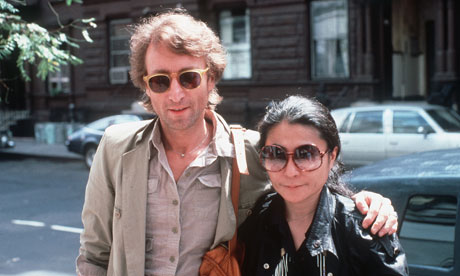
John Lennon and Yoko Ono in 1980
John and Yoko
When we were growing up, my brother and I, we both loved the Beatles, and he loved John Lennon especially. Our parents used to give us a Beatles album every Christmas. Sgt Pepper was the last one we got. Maybe we left home after that, I can't remember. 

My brother used to live in small bedsits in Sheffield. I'd go and visit him, and for bedtime reading I'd always take down John Lennon Speaks. Lennon, around that time, always seemed a bit daft, always going over the top and changing every minute. But I always believed him. He never struck me as a man who lied. He was always searching for something, trying something out, taking a new tack.
John, along with Yoko, tried to use his public power for peace, a word that only presidents use any more. Yoko and he looked so funny in bed surrounded by cameras and flashbulbs, all white and eccentric. Then there was the political phase that openly declared John's love affair with New York. The cover was all newsprint and John and Yoko were angry and left and topical. And above all, naïve and enthusiastic in the way they picked things up.
I've never written an obituary before. The last time I felt like this was when Kennedy died and some essential safety seemed to have gone from the world. I was too young to understand it, but I knew something was wrong. I haven't written any because most of my friends are too young to have died. Including John. Now I feel like some binding thing has been torn, not only a period in life but a whole growing-up.
The Beatles were ours, mine and my brother's, in the sixties. Our parents came to like them, grudgingly at first and then wholeheartedly. The sound was ours and the media made them everybody's – they were more reproduced than Kennedy. John was always winking into cameras, taking the piss out of the medium, making it human. His wit was always Liverpudlian to the core. John was always a wag.

The Beatles got wrapped up more and more into a nice homely package. Everyone loved them, America canonized them and still does, and the media hugged them. People didn't like John giving back his medal and a lot didn't think he deserved it in the first place, but they ended up respecting him. When John was primal-screaming about his Mother or appearing on the Two Virgins cover, his sheer innocence and commitment somehow enabled him to lose his dignity and recover it at the same time.
He was a holy fool and still a bit of a wag.
And then he went to New York and left the public eye. He started escaping the cameras and trying to live his own life with Yoko and his child. All through the 60s, every gesture he made was mirrored a thousand times by followers and a million times by cameras. He began to live for the public, using his gestures as responsibly as he could. Then he stopped writing his diary in the public eye. John sought anonymity, privacy, peace, a family life.
Nobody seemed to quite believe in John and Yoko's private life. Many resented it: they were so used to him and "they never trusted Yoko". The papers had great difficulty in letting them disappear, he'd been such good copy. Somehow he managed it by being normal in NYC for a while. He'd be frequently sighted in the Village, arm in arm with Yoko. He'd chosen his privacy and the locals at least respected his wish.
Starting Over wasn't really a new start. It was just a reminder that John still existed, still loved Yoko and rock'n'roll, like suddenly getting a telephone call from a friend you used to spend every day with and haven't seen for years. I felt sick when the radio started this morning. I wanted it to be a hoax. I wanted him to have what he wanted, his son and his wife. And I can't believe he died like that, his body broken. How could anybody hurt John, whom everyone loved like they loved their youth?
I'm in a state of shock. I want to talk over the old days and how we always loved John whatever he did because he always did it all the way with the best drum sound. And he wrote down growing up for us.
Crazy John. Poor Yoko. Some stupid bloke killed him because he used to be famous. All you can say is that he always will be. The world's gone mad and now I'm going to try and get through to my brother again. Because I want to remember. You owe him that and a whole lot more.

More: The Lennon Letters

“The John Lennon Letters” edited by Hunter Davies

 By JAMES ROSEN, Washington Post Published: December 1

“In a hundred years from now,” John Lennon sang in a satirical home demo he recorded in New York in 1978, “they’re going to be selling my socks, like Judy Garland! And I hope they get a good price!” So the founder of the Beatles predicted this day would come — and as editor Hunter Davies makes clear in his prefatory remarks to “The John Lennon Letters,” even the ex-Beatle’s unsigned grocery lists and skimpiest doodles now command five figures at Sotheby’s.
A massive deposit of freshly excavated notes, screeds, asides and howls, each lavishly reproduced and carefully annotated, “Letters” is the most intimate book ever published about Lennon. In its revelation of the man’s psychology, it far surpasses all previous accounts by wives, lovers, half-siblings, ex-aides and even the best biographers. This is Lennon unfiltered and characteristically defiant, scrawling ferociously across lined paper, homemade Christmas cards, Indian novelties, fading Apple Corp. letterheads. Fans of the Beatles and Lennon, students of popular culture, armchair lovers of English and Irish wit, and anyone fascinated by the inner workings of the creative mind: All will find Davies’s book essential.
Those partial to the Beatles’ early Motown covers may be pained to read Lennon’s casual dismissal of them, on American Airlines stationery, in September 1971: “ ‘Money’, ‘Twist ’n’ Shout’, ‘You really got a hold on me’ etc. I always wished we could have done them even closer to the original.”
“Letters” also delivers the earliest known explanation of why Lennon left his wife and son for Yoko Ono. “She’s as intelligent as me (you can take that any way!),” he writes about Ono to his Aunt Harriet, his mother’s sister, in 1968. “She’s also very beautiful — in spite of reports in the press to the contrary — she looks like a cross between me and my mother — has the same sense of humour too!”
Captured here, too, are Lennon’s views on creativity, as set forth in a 1967 letter to a cheeky student from Quarry Bank High School, the prototypical dehumanizing British institution where Lennon, a decade earlier, had honed his rebel persona. “All my writing,” Lennon says, “I do it for me first — whatever people make of it afterwards is valid, but it doesn’t necessarily have to correspond to my thoughts about it, OK? This goes for anybody’s books, ‘creations,’ art, poetry, etc. — the mystery and [expletive] that is built around all forms of art needs smashing, anyway.”
The present owner of that two-page gem is a dentist in Arkansas. Davies’s detective work in uncovering the book’s 286 entries and tracing their complicated provenance makes for an entertaining divertissement. No one is more qualified. Two of the letters reprinted herein were addressed to Davies himself. To research “The Beatles,” the acclaimed authorized biography he published in 1968, he spent the years 1966-68 hanging out with the band — in their homes, at Abbey Road studios, around Swinging London.
Of that book, still an indispensable work, Davies writes here that despite urgent pleas from Mimi Smith — the stern-faced Liverpool aunt who raised Lennon and demanded the excision of all references to his youthful swearing and thievery — he “changed nothing.” This conflicts with Lennon’s 1970 Rolling Stone interview, in which he trashed “The Beatles” and added: “It was written in this sort of Sunday Times [style]. . . . No truth was written, and my auntie knocked all the truth bits out about my childhood and me mother and I allowed her.”
Davies also proves surprisingly error-prone. He guesses 1970 as the year Lennon sent to Melody Maker’s Ray Coleman an undated postcard that was signed “Them Beatles.” Davies should have known better. By 1970, Lennon wasn’t signing anything in the name of the Beatles. Indeed, only 23 pages earlier, Davies reprints Lennon’s angry instruction to a lawyer in 1969: “I don’t want to read about ‘Beatles’ as if they’re still alive — OK?” What’s more, in the photographs section of “Lennon,” Coleman’s excellent 1984 biography, well known to all Beatles scholars, Coleman reproduced the “Them Beatles” postcard and correctly dated it from the group’s 1965 European tour.
Other problems include a tantalizingly incomplete poem that Lennon scribbled on a Japanese postcard circa 1965 or ’66 (“When a girl begins to be a problem/ Pretty soon the girl must go”) that Davies heralds here as previously unpublished. But surely he saw this item reproduced just last year, in “Beatles Memorabilia: The Julian Lennon Collection,” a handsome coffee table volume that elsewhere in “Letters” he cites by name. Most egregious is the 1971 date assigned to a postcard that Lennon sent to Julian and signed “love/Dad Yoko Sean.” Sean Lennon was born in 1975. There are also sins of omission, as Davies’s selections from Lennon’s Hamburg and Cavern Club days appear tamer than other letters from the same period.
Our view of Lennon isn’t changed by his letters, but sharpened. He emerges here a whimsical and irrepressible soul — undeniably a multifaceted genius — and a formidable scold. He appears to have nurtured a lifelong love-hate relationship with Christianity, a dynamic that, when fully exposed here, makes the furor he provoked in the summer of 1966, with his comments about the relative popularity of the Beatles and Christ, seem less inadvertent than inevitable.
However, Lennon also betrays the touching desire to end even his angriest exchanges on a conciliatory note. At Christmas 1971, after spending the year hurling profane thunderbolts at Paul and Linda McCartney in public and private, he sends them a short note. It accompanies what Lennon believes to be a bootleg copy of the Beatles’ first — and unsuccessful — tryout for a major British label, recorded on Jan. 1, 1962. “Dear Paul Linda et al, this is THE DECCA AUDITION!!” he writes, with a fan’s enthusiasm. “They were a good group/ fancy turning THIS down! Love John & Yoko.”

Thursday, December 6, 2012

In Dire Need Of Patriots

These are worrisome times. As diplomatic relations between the Philippines and China grow increasingly testy over a few disputed islands, feelings of nationalism are being stirred by politicians to conjure resentment towards a much larger force already at the gates.

Although both nations are free from colonial rule and have separate sovereignties, one is stepping on the other. China's sense of nationalism evokes tyrannical behavior towards weaker countries such as ours.

We could learn from the examples of the American Revolution for inspiration, and in our current plight, I feel it's appropriate to point out the importance of patriotism during these troubled times. As China continues to insult us by establishing cities within our domain, more than ever, we need patriots.

America's great men, freemasons and fathers of independence didn't won their freedom because they felt that they are better than the English, but because they believed that they are equals as "all men are created equal."

Thus, it is in the spirit of equality that the American Revolution was born and won. Taking up arms just became a necessity in order to protect that independence.

Let me point out that there are slight differences between freedom and independence. Freedom is separation, independence is control. A nation can be independent without absolute freedom.

Case in point, The British Empire. While Canada, Australia and other members of the British Commonwealth have sovereign and independent governments, they are still under the passive rule of one queen. Laws cannot be passed and elections cannot be called without the blessings of the queen through the senate and the Governor-General who represents the crown.

Jose Rizal, National Hero and Patriot
Let me also point out the difference between nationalism and patriotism.

Nationalism gives more importance to unity by way of a cultural background, including language and heritage. This way of thinking results in valuing one's country's virtues and not it's deficiencies, creating a sense that one's country is better than any other which makes accepting criticism a difficulty.

Patriotism on the other hand pertains to the love for a nation, with more emphasis on values and beliefs. It values responsibility rather than just blind loyalty towards one’s country. Patriots believe that their country is one of the best and can be further improved in many ways.

It is through nationalism that our history experienced two world wars. Through patriotism, we ended both by defeating the ideals of racial superiority and dominance.

I call upon our leaders, our great men and women to teach the values of patriotism and to appease our resentments, but be ready, if necessary, to take up arms and lead us when the worst becomes inevitable to protect not just our territory but the collective aspirations of our people.

As a pacifist, I believe that taking up arms is an option of last resort. Resolving differences through diplomacy should be our goal of priority. We should avoid nationalistic pride to better our emotions and cloud our judgements.

Nationalism is a poison to society. Novelist George Orwell referred to it as "the worst enemy of peace." I think it's a disease that prevents a nation to reach true greatness. In the end, isn't greatness what we ultimately want for our nation?

Tale of the tape

About The Author

Victor Dela Casa spent over a decade working as business professional in Canada. Worked in IT, finance, marketing, international trade, public service, project management and the maritime industry. Degree in Economics from the University of the Philippines and Honours Diploma from Eastern College.

The Holiday Doomsday Blues


Would Dying Stop You From Living?

Would you still celebrate this holiday season (Christmas) if you know that the world would undoubtedly end on the 20th of December?

As humans, we have a natural inclinations to ask and discover. Our inquisitiveness has led us to question both scientifically and spiritually, the true meaning behind and beyond our existence.

Since we developed reason and logic, we've grown increasingly concerned about the end of our civilization. Internet search bots came up with a set of numbers: 21-12-12. When translated into the Gregorian calendar system, it stands for December 21, 2012.

Nobody's sure what would happen on this particular date. We can only assume. But I can guarantee that its either (1) something huge is going to happen or (2) nothing at all.

Doomsday theorists and prophets are all looking up to the skies for answers...while researching through vague ancient knowledge. The date itself is actually correlative to the Mayan Long Count Calendar which also coincides with the Precession of the Equinoxes, the gradual shift in the orientation of the Earth's axis of rotation.

The Mayans calculated that the current "creation age" will end on the 20th of December and a new creation age will begin on the 21st based on the 5,125 year cycle of their sophisticated calendar system. Although the MezoAmericans left no clear suggestions (aside from recurring references to sky and water), the words end, begin and creation all seem to point to something cataclysmic and horrifying regardless of how you look at it.

The culprit to our potential sadistic demise seems to point up to the heavens. There are theories about a rouge planet, binary star combinations, pole shift effects, a super massive solar storm, interplanetary gravitation, intergalactic alien invasion, a harvest, and spiritual rapture. Whatever it is, we don't know. In fact, winter 2012 could very well be just another ordinary day.

Before you panic, think. What sets off our fear for the unknown is our civilization's collapse and all that entails. In this age of superficial materialism, wouldn't it suck if your life ends? What will happen to your kids, your car, your house and your iPhone then? Who cares? If the world ends, everything will end with it.

And yet, life endured on this planet for millennia despite constant threats from here and space. We've been bombarded by interstellar debris, cooked by magma, poisoned by deadly gases and yet we remain. As the universe constantly gave us hell, it also gave us catalysts that reinforced the creation and continuity of life.

Looking at it from the universe' perspective, we are just a mere speck of space dust that could get crushed in an instant. It's telling us that we are not the center of this universe. Although it is not efficient in creating life, we are still here through random tinkering of the forces at play, perhaps a means for the universe to discover it's true self.

As constructive and destructive forces play a game of perpetual probabilities, we are mere pawns, ingredients that could easily get recycled, swapped and processed in this vast infinity of time and space. We are at the mercy of energies beyond our comprehension.

Thus, perhaps we exist to serve a much greater purpose -- life and death and rebirth -- not necessarily here nor in this form but certainly in whatever shape the universe wants us molded to be.

When I was about 7 years old, I had a near death experience. I fell from the stairs and hit my head. I remember everything was in black and white, I remember becoming deaf and crawling back home, passing out when I reached my mother.

My consciousness during that brief 5 or so minutes showed me a dark and smokey place with a light source in the middle that hurried towards me. When I reached the light, I vividly saw my older brother who died just a few years before. He told me "go back" and "not yet." Then I was pulled away so fast. When I came to, my mom was crying and my dad was holding a glass of water.

I don't know if that was just a dream or my mind playing tricks as I cling on to a small thread of life. But that experience sure had a lasting and profound effect on me. I've read an article once. We are all but light that originated from the same "one-ness" looking to find our true selves so that we can all become "one" once again. The laws that created the universe is the same laws that created us, albeit, in a smaller scale...or maybe not. Who knows?

Although I am not a very pious person, I do believe that there is a God somewhere. Maybe God is the universe itself. Somehow, that kind of makes some sense. If the universe is creation and destruction, isn't it God-like in it's power? Think that one through.


Whatever your beliefs are, if this lifetime ends just days before Christmas, there are a few things to think about:


1. Would dying stop you from living?
2. Would you call on some unexplainable power or force greater than anything you know while you face your extinction?
3. What would you do if nothing happens?

Life is a game of chance. It's a game that tests your courage, your resolve and your faculties. And yet, life is so fragile, so rare and so insignificant. Our existence could very well be a random occurrence. In our infinite desire to understand our role in the universe, we fall short to realize the sheer enormity and minuteness of our place in the "true" grand scheme of things.

Tunnel vision makes us measure our existence by what's in it for us rather than the other way around. All I know is if we cease to exist, whatever remains of us becomes building blocks for the creation of other life forms and cosmic entities. The universe will continue on, or it could just collapse on itself (again). Once again, who knows?

To me, that's the closest we're ever gonna get to understanding the meaning of our existence.

Note:
You should, perhaps, still celebrate this holiday season if the world would undoubtedly end on the 20th of December.


About The Author

Victor Dela Casa spent over a decade working as business professional in Canada. Worked in IT, finance, marketing, international trade, public service, project management and the maritime industry. Degree in Economics from the University of the Philippines and Honours Diploma from Eastern College.


Extra: Now something to think about...
(Source)


General Facts List


Philippines: Matter of Taste

Note: ONLY IN THE PHILIPPINES! !!

HIGHLY RECOMMENDED TO RELIEVE STRESS..... 
This is so funny...take time to read it all the way to the end..
The following is from a British journalist stationed in the Philippines . 
His observations are so hilarious!!! !


MATTER OF TASTE 
By Matthew Sutherland 

I have now been in this country for over six years, and consider myself in most respects well assimilated. However, there is one key step on the road to full assimilation, which I have yet to take, and that's to eat BALUT. 
The day any of you sees me eating balut, please call immigration and ask them to issue me a Filipino passport. Because at that point there will be no turning back. BALUT, for those still blissfully ignorant non-Pinoys out there, is a fertilized duck egg. It is commonly sold with salt in a piece of newspaper, much like English fish and chips, by street vendors usually after dark, presumably so you can't see how gross it is. 

Food dominates the life of the Filipino. People here just love to eat. They eat at least eight times a day. These eight official meals are called, in order: breakfast, snacks, lunch, merienda, merienda ceyna, dinner, bedtime snacks and no-one-saw-me- take-that- cookie-from- the-fridge- so-it-doesn' t-count. 

The short gaps in between these mealtimes are spent eating Sky Flakes from the open packet that sits on every desktop. You're never far from food in the Philippines . If you doubt this, next time you're driving home from work, try this game. See how long you can drive without seeing food and I don't mean a distant restaurant, or a picture of food. I mean a man on the sidewalk frying fish balls, or a man walking through the traffic selling nuts or candy. I bet it's less than one minute. 

Here are some other things I've noticed about food in the Philippines : 
Firstly, a meal is not a meal without rice - even breakfast. In the UK , I could go a whole year without eating rice. Second, it's impossible to drink without eating. A bottle of San Miguel just isn't the same without gambas or beef tapa. Third, no one ventures more than two paces from their house without baon (food in small container) and a container of something cold to drink. You might as well ask a Filipino to leave home without his pants on. And lastly, where I come from, you eat with a knife and fork. Here, you eat with a spoon and fork. You try eating rice swimming in fish sauce with a knife. 

One really nice thing about Filipino food culture is that people always ask you to SHARE their food. In my office, if you catch anyone attacking their baon, they will always go, "Sir! KAIN TAYO!" ("Let's eat!"). 

This confused me, until I realized that they didn't actually expect me to sit down and start munching on their boneless bangus. In fact, the polite response is something like, "No thanks, I just ate." But the principle is sound - if you have food on your plate, you are expected to share it, however hungry you are, with those who may be even hungrier. I think that's great! 

In fact, this is frequently even taken one step further. Many Filipinos use "Have you eaten yet?" ("KUMAIN KA NA?") as a general greeting, irrespective of time of day or location. 

Some foreigners think Filipino food is fairly dull compared to other Asian cuisines. Actually lots of it is very good: Spicy dishes like Bicol Express (strange, a dish named after a train); anything cooked with coconut milk; anything KINILAW; and anything ADOBO. And it's hard to beat the sheer wanton, cholesterolic frenzy of a good old-fashioned LECHON de leche (roast pig) feast.. Dig a pit, light a fire, add 50 pounds of animal fat on a stick, and cook until crisp. Mmm, mmm... you can actually feel your arteries constricting with each successive mouthful. 
I also share one key Pinoy trait --- a sweet tooth. I am thus the only foreigner I know who does not complain about sweet bread, sweet burgers, sweet spaghetti, sweet banana ketchup, and so on. I am a man who likes to put jam on his pizza. Try it! 

It's the weird food you want to avoid. In addition to duck fetus in the half-shell, items to avoid in the Philippines include pig's blood soup (DINUGUAN); bull's testicle soup, the strangely-named "SOUP NUMBER FIVE" (I dread to think what numbers one through four are); and the ubiquitous, stinky shrimp paste, BAGOONG, and it's equally stinky sister, PATIS. 

Filipinos are so addicted to these latter items that they will even risk arrest or deportation trying to smuggle them into countries 

like Australia and the USA , which wisely ban the importation of items you can smell from more than 100 paces. 
Then there's the small matter of the purple ice cream. I have never been able to get my brain around eating purple food; the ubiquitous UBE leaves me cold. 

And lastly on the subject of weird food, beware: that KALDERETANG KAMBING (goat) could well be KALDERETANG ASO (dog)... 

The Filipino, of course, has a well-developed sense of food. Here's a typical Pinoy food joke: "I'm on a seafood diet. "What's a seafood diet?" "When I see food, I eat it!" 

Filipinos also eat strange bits of animals --- the feet, the head, the guts, etc., usually barbecued on a stick. These have been given witty names, like "ADIDAS" (chicken's feet); "KURBATA" (either just chicken's neck, or "neck and thigh" as in "neck-tie"); "WALKMAN" (pigs ears); "PAL" (chicken wings); "HELMET" (chicken head); "IUD" (chicken intestines), and BETAMAX" (video-cassette- like blocks of animal blood). Yum,yum. Bon appetit.. 

WHEN I arrived in the Philippines from the UK six years ago, one of the first cultural differences to strike me was names. The subject has provided a continuing source of amazement and amusement ever since. The first unusual thing, from an English perspective, is that everyone here has a nickname. In the staid and boring United Kingdom, we have nicknames in kindergarten, but when we move into adulthood we tend, I am glad to say, to lose them. 
The second thing that struck me is that Philippine names for both girls and boys tend to be what we in the UK would regard as overbearingly cutesy for anyone over about five. Fifty-five-year- olds colleague put it. 

Where I come from, a boy with a nickname like Boy Blue or Honey Boy would be beaten to death at school by pre-adolescent bullies, and never make it to adulthood. So, probably, would girls with names like Babes, Lovely, Precious, Peachy or Apples. Yuk, ech ech.. Here, however, no one bats an eyelid. 

Then I noticed how many people have what I have come to call "door-bell names". These are nicknames that sound like -well, doorbells. There are millions of them. Bing, Bong, Ding, and Dong are some of the more common. They can be, and frequently are, used in even more door-bell-like combinations such as Bing-Bong, Ding-Dong, Ting-Ting, and so on. Even our newly appointed chief of police has a doorbell name Ping . None of these doorbell names exist where I come from, and hence sound unusually amusing to my untutored foreign ear. 
Someone once told me that one of the Bings, when asked why he was called Bing, replied, "because my brother is called Bong". Faultless logic. 

Dong, of course, is a particularly funny one for me, as where come from "dong" is a slang word for well; perhaps "talong" is the best Tagalog equivalent!! ! 

Repeating names was another novelty to me, having never before encountered people with names like Len-Len, Let-Let, Mai-Mai, or Ning-Ning. The secretary I inherited on my arrival had an unusual one: Leck-Leck. Such names are then frequently further refined by using the "squared" symbol, as in Len2 or Mai2. This had me very confused for a while. 

Then there is the trend for parents to stick to a theme when naming their children. This can be as simple as making them all begin with the same letter, as in Jun, Jimmy, Janice, and Joy. 
More imaginative parents shoot for more sophisticated forms of assonance or rhyme, as in Biboy, Boboy, Buboy, Baboy (notice the names get worse the more kids there are-best to be born early or you could end up being a Baboy). 

Even better, parents can create whole families of, say, desserts (Apple Pie, Cherry Pie, Honey Pie) or flowers (Rose, Daffodil, Tulip). The main advantage of such combinations is that they look great painted across your trunk if you're a cab driver. 

That's another thing I'd never seen before coming to Manila --taxis with the driver's kids' names on the trunk. 

Another whole eye-opening field for the foreign visitor is the phenomenon of the "composite" name. This includes names like Jejomar (for Jesus, Joseph and Mary), and the remarkable Luzviminda (for Luzon, Visayas and Mindanao , believe it or not). 

That's a bit like me being called something like "Engscowani" (for England , Scotland , Wales and Northern Ireland ). Between you and me, I'm glad I'm not. 

And how could I forget to mention the fabulous concept of the randomly inserted letter 'h'. Quite what this device is supposed to achieve, I have not yet figured out, but I think it is designed to give a touch of class to an otherwise only averagely weird name. It results in creations like Jhun, Lhenn, Ghemma, and Jhimmy. Or how about Jhun-Jhun (Jhun2)? 

How boring to come from a country like the UK full of people with names like John Smith. How wonderful to come from a country where imagination and exoticism rule the world of names. 

Even the towns here have weird names; my favorite is the unbelievably named town of Sexmoan (ironically close to Olongapo and Angeles). Where else in the world could that really be true? 

Where else in the world could the head of the Church really be called Cardinal Sin? Where else but the Philippines.

Note: Philippines has a senator named Joker, and it is his legal name.

Extras: More Sources of Inspiration


Wednesday, December 5, 2012

Molannen Commits Suicide


By Jenalyn Villamarin | December 5, 2012 4:26 PM EST
Gretchen Molannen, a 39-year-old woman featured in a Tampa Bay Times story, was found dead late Saturday at her home in Spring Hill, Florida. Officials of the Hernando County Sheriff's Office did not give information on exactly when and how Gretchen Molannen died but records revealed the deputies responded to a suicide call around midnight on Saturday.
The Times received email messages from Gretchen's two friends who confirmed her sudden death and lamented that she did not receive the help she needed.
For 16 years, Gretchen Molannen struggled with a rare genital arousal disorder which is an unbearable condition marked by continuous sexual arousal. Women suffering the rare disorder are physically but not psychologically aroused. Some doctors deem that the condition is caused by a nerve malfunction.
Molannen sought help from numerous medical professionals but several claimed they had never heard of the condition. With not enough money for tests or treatments, she tried to work but her condition affected her job performance. Molannen was also unable to maintain steady employment after 1999. Her devastation over her condition eventually tempted her to commit suicide at least three times.
The Times discovered Gretchen Molannen's story on Craigslist in early 2012. She was still looking for help from medical professionals. Molannen agreed to tell her story to Times in July. The Times interviewed her for a total of 10 hours, half in person and the other half on the phone.
Before the publication, the Times thanked her via email and phone call to which she responded in an email message that stated: "Thank YOU for taking an interest in doing a story for me! I am flattered that you cared so much to want to help. I just hope this will educate people that this is serious and really exists, and that other women who are suffering in silence will now have the courage to talk to a doctor about it. If men have suffered with the shame of impotence or even priapism, now it's time for women to get help as well. Thank you for your patience with me and for devoting so much time to this. I'm sure your editor is very proud of your work and I'm excited to see my own story online."
After revealing Gretchen's story, the Times received several offers to help Molannen both from legal and medical professionals. Two women even called to say they had a similar problem with Gretchen and hoped to talk to her about it. Too bad it is already too late. Gretchen's story was also shared on a support group for women with the persistent genital arousal disorder. Their web site www.psas-support.com provides more information about the support group.

Contact

Let's Chat!

Interested? Want to learn more? Send me an email.

Address:

Olongapo City, Philippines

Work Time:

Monday - Friday from 9am to 5pm

Phone:

+63 917 565 2031